


7 Garage Storage Mistakes That Are Wasting Space in Your Home

Here's an unpopular opinion: most garages are badly organised because they were never designed for the way people live today.
Modern families need space for bikes, golf clubs, paddleboards, camping gear, gardening equipment and children’s toys. Yet many garages still rely on a few basic shelves, a couple of hooks and a lot of wishful thinking.
The result? Cluttered floors, wasted wall space and garages that feel far smaller than they actually are.
The truth is, most homeowners don’t need a bigger garage, they just need to think differently and a better storage system.

Most storage frustrations come down to a handful of common mistakes that make garages harder to use than they need to be. Here are seven of the biggest culprits—and, more importantly, how to avoid them.
At a Glance
✓ Stop storing everything on the floor.
✓ Use walls and ceilings to your advantage.
✓ Match your storage to your lifestyle.
✓ Create dedicated zones.
✓ Don't overlook seasonal items.
✓ Choose systems that can evolve with your family.
Mistake #1: Treating the Floor as Storage Space
It's the easiest mistake to make and can often be the most damaging. Many garages become filled with bikes, sports gear, boxes and gardening equipment simply because the floor feels like the obvious place to put things. The problem is that every item left on the ground reduces usable space and makes the garage harder to clean and organise. When equipment is piled up, garages quickly start to feel smaller than they really are.
A better approach
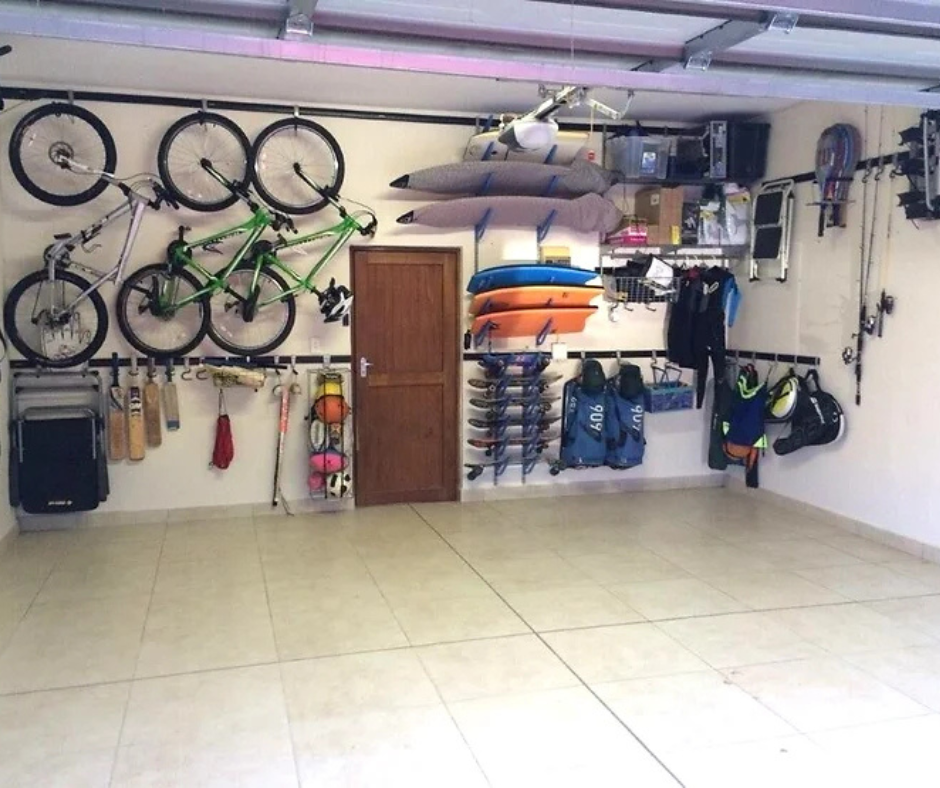
Move as much as possible onto the walls. Bikes, ladders, kayaks, surfboards and tools can all be stored vertically, freeing up valuable floor space and making the garage far easier to use.
Mistake #2: Ignoring the Walls
Most garages have an enormous amount of unused vertical space. And whilst South African families often own a wide range of outdoor equipment such as mountain bikes, fishing rods, golf clubs, camping chairs and beach gear, very little of it actually needs to sit on the floor.
Wall storage systems are one of the most effective ways to maximise space because they keep items visible, accessible and organised.
A better approach
Install a combination of:
Rail systems.
Storage panels.
Hooks.
Baskets.
Shelving.
The flexibility to move accessories around means your garage can adapt as your hobbies and storage needs change.
Mistake #3: Buying Storage Before Making a Plan
Many homeowners buy shelves or cabinets before thinking about how they actually use the garage which results in cupboards that might not be the right size which can block car doors. You might find the shelving you thought looked good just collects clutter and that expensive storage unit doesn't solve the problem.
So before installing anything, think about:
What you store.
How often you use it.
Who needs access to it.
How much space your vehicle requires.
A better approach
Plan your garage around your lifestyle first and your storage second.
Mistake #4: Mixing Gardening Tools with Sports Equipment
A garage works best when it has clear zones as without them, footballs end up next to paint tins, bicycles lean against camping gear and garden tools get lost behind boxes.
This is particularly important for active families, where different members of the household often use the garage for completely different reasons.
A better approach
Create dedicated areas for:
Sports equipment.
Gardening tools.
DIY supplies.
Household storage.
Seasonal items.
Outdoor adventure gear.
Even a small garage feels more spacious when every category has its own place.
Mistake #5: Forgetting About Seasonal Storage
One of the biggest sources of clutter in a garage can be the equipment that's only used a few times each year. Think Christmas decorations, camping gear, beach umbrellas and extra outdoor furniture that often occupy prime storage space despite spending most of the year untouched.
A better approach
Store seasonal items above eye level or in overhead storage systems. Reserve the most accessible areas for the things you use every week.
Mistake #6: Choosing Storage That Can't Grow With You
Family life changes quickly. The scooters your children use today may become mountain bikes tomorrow. Camping equipment turns into paddleboards, and one toolbox somehow becomes five. Fixed storage systems can struggle to keep up with these changes.
A better approach
Look for modular systems that allow you to move shelves, hooks and accessories as your storage requirements evolve.

Mistake #7: Using the Garage as a "Temporary" Dumping Ground
Almost every garage has a corner where things are left "just for now". The problem with that is that temporary piles have a habit of becoming permanent. Over time, these areas spread and gradually take over the entire garage.
A better approach
Every item should have a dedicated home. If you don't know where something belongs, that's usually a sign that your storage system needs rethinking.
Why Getting Your Garage Organised Matters
A well-organised garage does much more than improve appearances.
It can:
Protect expensive equipment.
Save time.
Reduce stress.
Free up space inside your home.
Make family activities easier.
Help you park your car where it belongs.
Most importantly, it turns the garage from a dumping ground into a space that genuinely supports the way your family lives.
Frequently Asked Questions
What is the biggest garage storage mistake?
The most common mistake is storing everything on the floor instead of making use of walls and vertical space.
Should I choose wall storage or cabinets?
Both have advantages. Wall systems are ideal for larger items and sports equipment, while cabinets are better for smaller items and tools.
What should never be stored directly on a garage floor?
Bikes, surfboards, electrical equipment, cardboard boxes and sports gear are all better stored on walls or shelving.
How do I keep my garage organised long-term?
Create dedicated zones and choose flexible storage systems that can adapt as your family's needs change.
How can I organise a small garage?
Focus on vertical storage, overhead space and keeping everyday items easy to access.


Comments